

Beans Vs. Bullets: Preparing for Disaster Without Being an Asshole
The difference between stocking up and hoarding

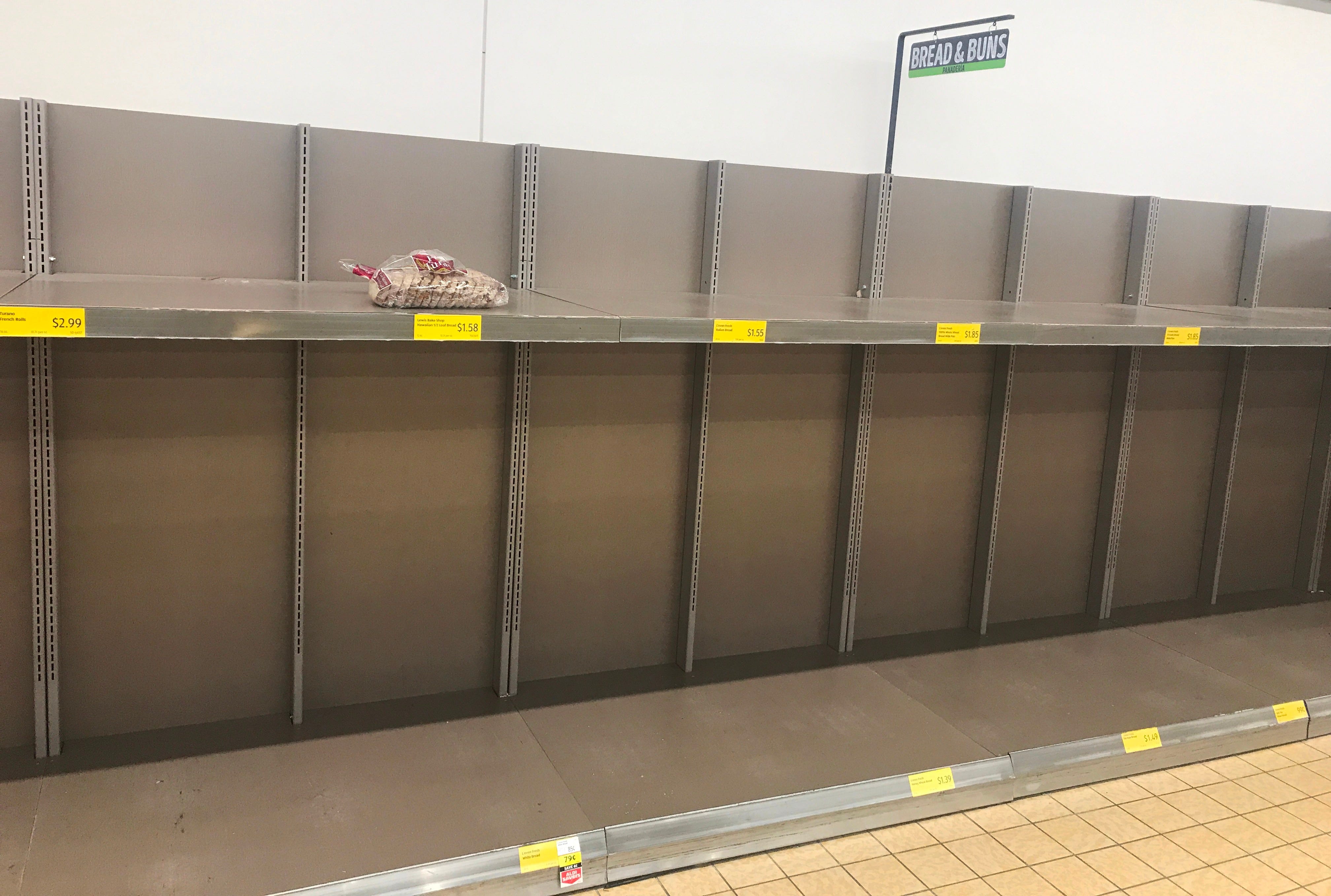
This is a good time to talk about what it means to be prudent and prepared versus running around hoarding everything.
Preparing means buying tomorrow’s groceries today. Hoarding means buying things you don’t need simply because you’re afraid someone else might get to them first.
About 25 years ago, a major blizzard shut down everything in my region for a few days, and when I finally managed to get to a grocery store there wasn’t much in it. It really brought home to me how fragile our food distribution systems are. From then on I began keeping a well-stocked pantry.
I remember saying, “Hey, what would happen if all of a sudden some kind of Middle East thing cut our oil supply and trucks couldn’t deliver to every grocery store every day? Seems like that sort of thing could happen eventually.”
I’ll mention the Strait of Hormuz here for no particular reason.
So long before the pandemic, I was prepared. And at some point in early February 2020, I took a look and went shopping to fill in my pantry’s gaps, wondering as I filled my cart why nobody else seemed to see what was about to happen.
So OK. We had a pandemic, we will always have blizzards and hurricanes and whatnot, and we now have a global energy crisis that has no end in sight. Plus … climate change. How, exactly, do we respond?
Not like J.D. Vance. In his most recent book, he says the first thing he did when he learned the pandemic was coming was buy 100 rounds of ammunition.
My first thought was about being able to feed and care for my family. My second thought was that others around me might need some help and I wanted to be able to have enough to share if that happened. If people were hungry, I hoped to help feed them — not kill them.
But that’s just me. I guess we all have our own ways of coping.
I went for black beans over bullets.
Buy What You Eat, and Eat What You Buy
I think a lot of those panic pandemic purchases ended up being thrown out because too many people bought things they do not normally eat. People mostly didn’t get so desperate that they’d eat a dinner of one can of stewed tomatoes and one can of fruit cocktail, so all that stuff just expired on the shelf.
So that’s my first tip: Buy what you eat, and eat what you buy.
My husband and I routinely eat black beans with brown rice, so I keep a lot of that in stock. If you do not normally eat beans and rice, don’t buy it all up. We also eat a lot of pasta, so having jars of tomatoes and boxes of dried pasta makes sense. It lasts a long time, so as long as you rotate your stock, you’re good.
Ditto for things like lentils and any canned tomato products. They’re versatile, they keep long-term, and it’s easy to make any number of dishes using various combinations of rice or pasta, canned tomatoes and beans. Those are staples in my kitchen.
Of course, plain staples are pretty boring so don’t forget to keep plenty of whatever spices you like around — and again, rotate them because they do not keep forever. Some hot sauce will jazz up your plain food if it comes to that and that does keep longer.
Don’t forget little things like pickles, olives, crackers, dried fruit and nuts.
I did not stock up on things like most other canned fruits and vegetables because I would not eat them unless I truly had no other option.
I only bought things we regularly eat. I can’t see wasting pantry space on things I would only eat under desperate situations. Peanut butter, yes. Tuna and canned salmon, good to have. Cooking oil is a must. Some dried milk? A canister of oatmeal? Absolutely.
Canned green beans? Only if starvation is the alternative. (I like fresh or frozen fruits and veggies.)
Shelf-Stable Food Is Your Friend
And you do want to concentrate on shelf-stable things. I have a deep freeze but we just had a 14-hour power outage and if it had gone on much longer I’d have lost a lot of frozen food. I don’t want that.
Pro-tip: Keep some big bags of ice or frozen gallon jugs of water in your deep freeze because a full freezer functions better than a half-empty one. The mass of frozen water will help maintain the cold a bit longer during a power outage.
Don’t forget baking. I make a lot of bread, so I buy flour in bulk. I also purchase wheat berries in bulk and grind them myself. Wheat berries (and rye, etc.) keep practically forever if stored properly.
Plus, I made a sourdough starter in 2015. (I gave away so much starter during the pandemic!) The yeast shortage didn’t concern me in the least.
I always have salt, baking soda, baking powder, etc. With flour, I can make pretty much any baked good I might want — bread, tortillas, pita, muffins, buns, popovers, crumpets, pancakes, waffles.
But if you’ve never baked a biscuit in your life, don’t stock up on baking goods that will just rot.
Maybe learn to bake, though.
Your Pantry Is an Extension of the Warehouse
It’s not just food, of course. We all learned not to take the toilet paper supply for granted. I always buy that in bulk from Costco so we were fine, and we also have a bidet so I wasn’t worried.
But do you also have plenty of things like soap, shampoo and toothpaste? Basic cleaning supplies like laundry detergent and dish soap? A gallon of vinegar and a big box of baking soda? Bleach?
Look, every one of these things is sitting in a warehouse somewhere. Think of your pantry as an extension of those warehouses. You could buy one jar of pickles every week, or you could buy two jars of pickles for several weeks until you have a row of them in your pantry. From then on, you buy one jar per week.
You’re using the same amount of food as always. You’re just buying it early.
Ever since the supply chains broke during the pandemic, the availability of a particular type of pickle I need for one of my husband’s favorite dishes has been off. So some weeks there are none available, and it’s fine because I have four or five jars in reserve.
Sometimes I’ve used every jar I have while waiting for that pickle to show up in the store again. We use a constant amount; the only question is whether a few jars will be in their warehouse or my kitchen.
And that’s my attitude toward everything in my pantry. I’m going to use it eventually. Does it matter if there’s a case of it on my shelf or the warehouse’s shelf?
Preparation Isn’t the Same As Hoarding
I do not see this as hoarding. In fact, the people who went into the pandemic without any extra food on hand actually had more food available to them in stores because I was not in there fighting for the last roll of toilet paper or jar of spaghetti sauce. I’d bought everything long before.
This is classic advice for lower-income people, too. If you have a few extra bucks one week, try to stock up a little more. Then you’ll have something to eat if you’re flat broke the following week.
Common-Sense Prepping is Really About Community
This is only scratching the surface. For people with space for a garden, that’s a whole other topic. I haven’t brought up things like first aid kits, flashlights, batteries, solar panels and the like because those are all big topics.
If you want to read the real pantry expert, subscribe to Hannah | A Feral Housewife. If you want to read about common-sense prepping, subscribe to Jessica at Grounded.
If you just want to be ready to shoot people as soon as things go wrong, J.D. Vance is your guy.

If you liked this piece, you might also like this one:

About Michelle Teheux
I’m a writer in central Illinois. If you like my work, subscribe to me here and on Medium. I also have a new Substack aimed at authors who want to self-publish books, called The Indie Author. My most recent book is Strapped: Fighting for the soul of the American working class. My most recent novel is The Trailer Park Rules. Tips joyfully accepted via Ko-fi.

All wealthy families are alike; each poor family is poor in its own way.
— Leo Tolstoy, if he had written about a trailer park
For residents of the Loire Mobile Home Park, surviving means understanding which rules to follow and which to break. Each has landed in the trailer park for wildly different reasons.
Jonesy is a failed journalist with one dream left. Angel is the kind of irresponsible single mother society just shakes its head about, and her daughter Maya is the kid everybody overlooks. Jimmy and Janiece Jackson wanted to be the first in their families to achieve the American dream, but all the positive attitude in the world can’t solve their predicament. Darren is a disabled man trying to enjoy his life despite a dark past. Kaitlin is a former stripper with a sugar daddy, while Shirley is an older lady who has come down in the world and lives in denial. Nancy runs the park like a tyrant but finds out when a larger corporation takes over that she’s not different from the residents.
When the new owners jack up the lot rent, the lives of everyone in the park shift dramatically and in some cases tragically.
Welcome to the Loire Mobile Home Park! Please observe all rules.
Same! When I pull out the last bottle of dish soap or soy sauce, it’s time to buy more.
It’s also a good policy in winter, so you can delay shopping if the weather is bad.
This is exactly how I live/shop/eat. I figure we could eat reasonably well for a year without bringing anything new into the house. I have two deep freezers plus a whole shelf unit full of food. All stuff I eat. More than half of it is stuff that would keep for over 5 years. I rotate it and fill in gaps as they appear. Big reason is emergency preparedness but also it saves money to buy stuff in larger quantities and also it helps a little bit with inflation since a lot of what I'm eating today cost me last year's price! I rarely have to throw anything away as I make managing it a priority. Both my parents lived through World War II and my mother spent her adolescence in Nazi occupied France. And then I spent my late 20s and all of my 30s as a subsistence farmer so I guess I have lots of background that makes me this way!